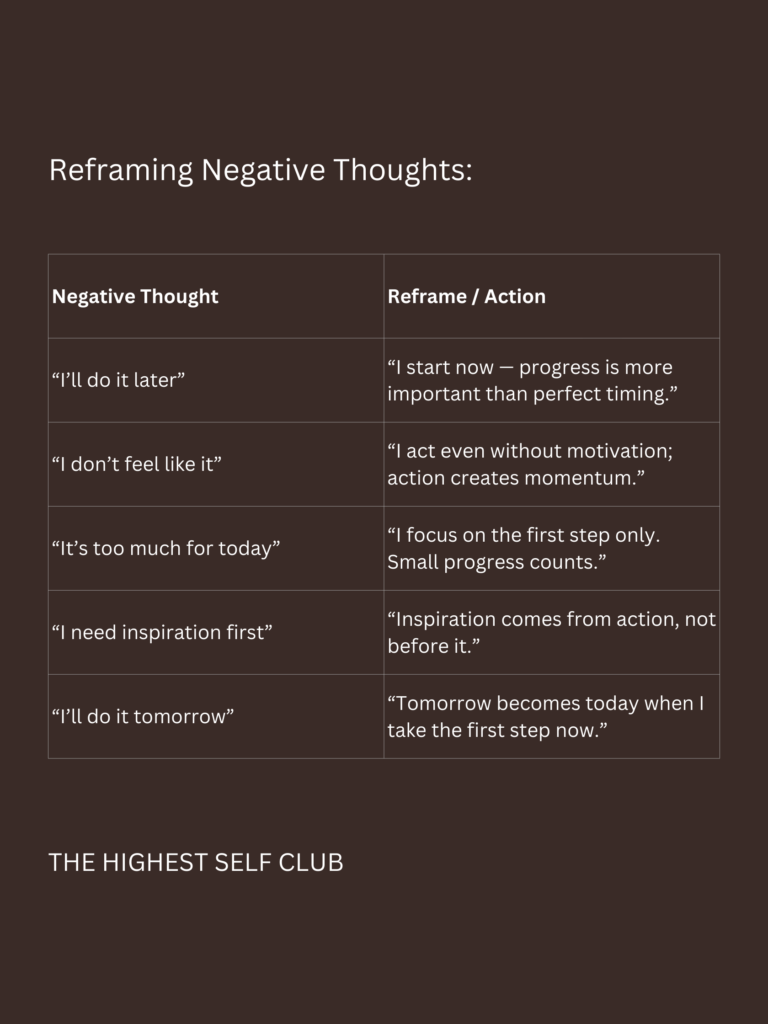
Discipline is often misunderstood as forcing yourself to act against your will or waiting for motivation. In reality, consistent self-discipline is about choosing your identity, structuring your life, and acting in alignment with your values every day. This is how I operate, even as a mom of a three and a half month old — balancing my routines, my baby, and my professional life without feeling overwhelmed.
James Clear | #1 New York Times bestselling author
Neuroscience shows that our brains function optimally when we reduce cognitive load and create habits that align with our identity. When decisions are pre-planned and repetitive behaviors become automatic, the prefrontal cortex — the part of the brain responsible for willpower and decision-making — is freed to focus on creativity, problem-solving, and high-priority tasks.
Studies on decision fatigue confirm that every unnecessary choice drains mental energy, leading to procrastination, stress, and suboptimal decisions. By consciously organizing your routines and focusing on identity-driven action, you conserve your cognitive resources for what truly matters.
Discipline starts with deciding who you want to be, not reacting to moods or circumstances.
• Stop thinking: “I’m just like this.”
• Ask yourself: “Who do I want to be today, consistently?”
• Acting from this chosen identity eliminates the question of motivation — your actions follow naturally.
• Mental clarity: you know what kind of person you are in every moment.
• Less internal conflict: no debate between “I should” and “I don’t feel like it.”
• Predictable outcomes: your daily actions are aligned with your values.
Since I am a mom of a three and a half month old, I free up mental energy for what really matters. Organization is key.
I created a weekly plan for all my essential routines:
• Gym workouts
• Home workouts
• Hair care and styling
• Manicure & pedicure
• Daily rituals: meditation, journaling, visualization
I put everything in my calendar and follow it without thinking. Fixed routines free mental space for unexpected tasks, while ensuring my priorities are completed.
Your brain was not designed to make hundreds of small decisions every day.
Every choice — even “Should I train today?” — consumes cognitive energy.
When that energy is drained on minor, repetitive decisions, you have less capacity for:
• strategic thinking
• creativity
• emotional regulation
• high-impact problem solving
That is why organization is not control.
It is mental freedom.
If you want to eliminate decision fatigue, you need a life structure.
Not a chaotic to-do list.
A framework.
Start by asking yourself:
Examples:
Business / Career
Family
Partner
Health / Sport
Personal Growth
Spirituality
Lifestyle / Self-care
Hobbies
Be honest.
Your life has categories whether you define them or not.
Now define them consciously.
For example:
Training
Grocery shopping
Content creation
Hair care
Date night
Admin work
Journaling
Meal prep
If something happens every week, it should not require a weekly decision.
Instead of:
“I’ll train when I feel like it.”
Create:
“I train Monday, Wednesday, Friday and Sunday at 10:00.”
Instead of:
“I’ll journal when I find time.”
Create:
“I journal every evening at 21:30.”
Instead of deciding again and again, you follow a pre-made agreement with yourself.
Your brain relaxes because the question is gone.
Step 1 – Choose 3–5 fixed weekly anchors
These are non-negotiable repetitive blocks.
Example:
3 gym sessions
2 home workouts
1 self-care block
1 planning block
Daily 20 min reflection
Step 2 – Put them in your calendar
Same time. Same days. Repeated weekly.
Step 3 – Protect them like appointments
Not optional tasks. Scheduled commitments.
If applied consistently, this system gives you:
mental clarity
reduced overwhelm
increased productivity
emotional stability
more creative capacity
stronger self-trust
And perhaps most importantly:
You stop negotiating with yourself every day.
Multi-tasking is a myth — trying to think about everything at once creates stress and reduces effectiveness.
• Make a realistic to-do list.
• Until you finish one item, don’t think about the others.
• Complete one, then move to the second, then the third.
• Reduces mental clutter: your prefrontal cortex can fully focus on one task.
• Builds momentum: finishing small tasks gives psychological reinforcement – the feeling of success.
• Prevents overwhelm: avoids frustration from an impossible multi-list.


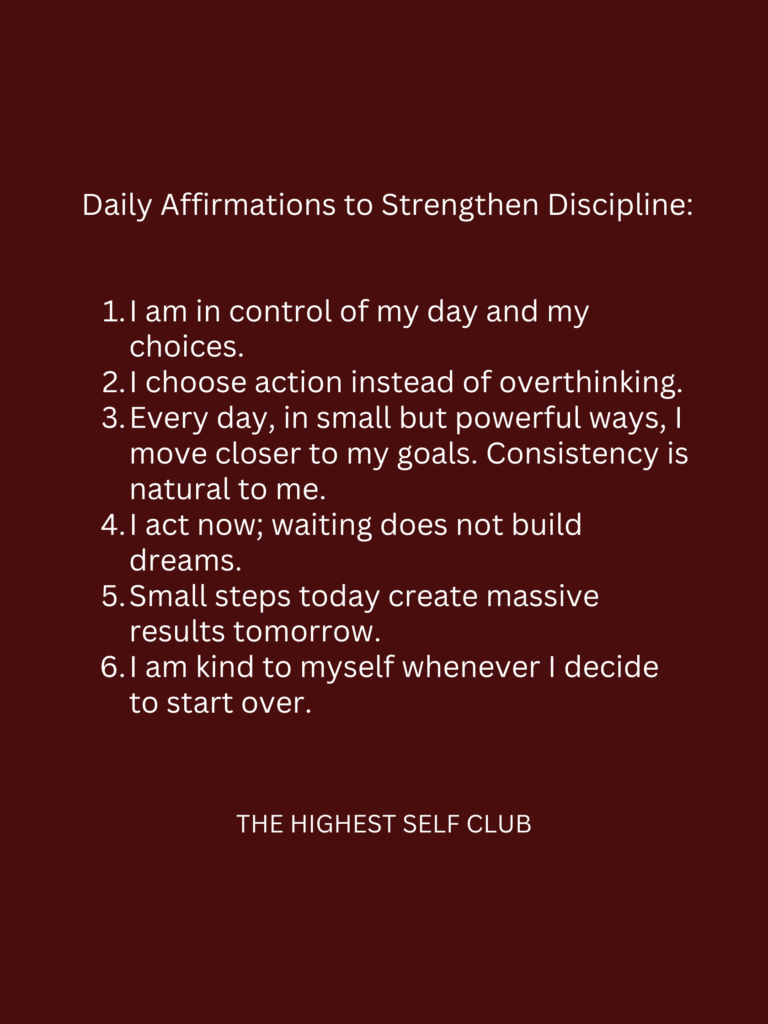
Identity without action is meaningless. Motivation is unreliable — action is consistent.
• Every day, practice your routines, even if you don’t “feel like it.”
• Small daily actions confirm your identity.
• Habits strengthen identity: repeated action reinforces who you are.
• Reduces procrastination: you’re not waiting for the “perfect moment.”
• Builds confidence: consistent action proves to yourself that you can rely on your discipline.
Don’t wait for breakthroughs. Instead, aim to be slightly better than yesterday.
• Small, daily improvements compound into massive long-term results.
• Focus on incremental growth, not rare inspirational leaps.
• Sustainable progress: small improvements accumulate without burnout.
• Positive reinforcement: you notice your own development.
• Long-term results: consistent micro-growth leads to extraordinary transformation over months and years.
Start by choosing your identity and fixing one or two routines this week. Track them in your calendar, focus on one task at a time, and notice how your mental energy and results expand naturally.
Keep rising, beautiful soul